Monday, May 22, 2017

World Cuisine: Eastern Asia

Asia is big.
Really big.
And every country has a very distinct culture.
Trying to narrow down the foods we try has been hard and in the end there is still a lot to cover, so we're covering Asia by region and will focus on a few countries within that region.
I will apologize in advance if we appear to have 'missed' something. Inevitably we will overlook somebody's favourite something, but believe me, it's not for lack of trying.

We're starting on the east coast! 
And Japan is about as east as you can go.
I was excited about Japan because strangely enough our family has ties to that country.
Even though none of us are of Japanese decent, my great-grandmother was born and raised in Japan and spent most of her childhood with a Japanese nanny as her parents were both British missionaries and frequently were not at home.
We have an array of Japanese art, clothing, and dishes around the house now because of her influence. My mom has memories of family New Year's dinners where she would make sukiyaki, much to the amusement of the relatives.
Sukiyaki is like a stew or a stir-fry which is prepared right at the table on a hot plate or electric wok. The family sits together at the table - typically an end-of-year get together- and serves themselves small portions of what is being cooked and replaces what they take with raw ingredients so there is a constant wave of fresh food.
Most of the recipes and photos I found online show this dish simmering in a broth with all the ingredients grouped separately in the pot. The one my family made was more of a stir fry where everything was mixed and cooked in a sauce. I finally found a Japanese book at the library that had a version almost identical to what my mom would describe.
Sukiyaki usually starts with beef, and then various other vegetables are added. The beef is supposed to be cut in very thin sheets so it cooks quickly and stays tender. The beef I cut ended up more like ribbons than sheets, but I wanted them more bite-sized for Toby. We added what G'ma typically added - Water chestnuts, bamboo shoots, bean sprouts, and mung bean noodles - as well as green onions and mushrooms, which appeared in every other recipe I read. The sauce is a mix of sake (rice wine), soy sauce and sugar.

Because we don't have a hot plate I cooked the meal on the stove and then brought everything to the table in one go. We had bancha green tea with dinner - another insistence of G'ma.

Sukiyaki is served in small amounts over rice. You only take what you want for a few mouth fulls and then serve your self some more.


In Japan it's impolite to lean over your bowl, and everyone knows it's difficult to lift food very far with chopsticks, so holding your small eating bowls is customary.


And of course, because we love it, we prepared maki rolls as well.


We took a book out of the library that was the story of a boy in Japan meeting a kappa, which is a Japanese mythical creature. Kappas are water creatures but can come on land for short periods of time if they keep some sea water in a divot on their heads. They like eating cucumbers from people's gardens, and in this story the boy finds a young kappa stranded in his cucumber garden because he ran out of water. The boy helps him back to the sea and they become friends. When the boy grown up he has a sushi restaurant and creates a roll with only cucumber in it to honour his friend and calls it a kappa roll! I had no idea this book would turn out to be the legend of 
the kappa roll, but it was very cool to learn!
For desert we found some mochi (thank goodness for the eclectic variety of international snacks at Winners) which is a gummy dough that is flavoured and formed in to balls, or wrapped around balls of ice cream or other sweets to make a gooey treat.


Ours had a 'cream' inside and was green tea flavoured. I really really wanted to like it, and maybe
it was just the flavour, but neither Toby or I were huge fans. Maybe I'll try a different flavour if I can find some more.

Next we did the obvious: China.
Chinese food is hard because we're so used to the Americanized version of it so the recipes online are not always authentic. And then authentic things like bird's nest soup and weird cuts of meat I either can't get or didn't really want to go that route.
We did find a handful of things to make a meal, but most of them I had to alter to be gluten free.
I found that most Chinese food is cooked or preserved in some way. Very few recipes ended up being raw or 'fresh' by the time they reach the table. Perhaps because the population is so large it's hard to keep up with fresh fruits and veggies? Everything was turned into a soup, stew, stir fry, filling, or was battered, fried and then sauced.

There are dozens of types of dumplings eaten in China, more traditionally around New Year's.
I made a gluten free pasta dough as the wrapper and we filled them with a mix of spinach, ground chicken, green onions, ginger, sesame oil, rice wine, and soy sauce, and then steamed them.
They actually turned out really good! I've tried making ravioli with this dough before and it was too tough, but these were quite tender and delicious. Maybe steaming them instead of boiling them helped?


I really wanted to make fried spring rolls too because that one thing I quite miss about the gluten world. We used rice paper instead of phyllo wrappers, and filled them with a traditional mix of
ground chicken, green onion, ginger, carrots, cabbage, and garlic.
They tasted about as close to the real thing as you can get! The filling smelled amazing as I was frying it and I almost wanted to stop there and just eat it. It was amazing how well the rice paper crisped up when deep fried too. Really delicious!


The last Chinese item we made was sweet and sour pork. The recipe called for the pork to be breaded first (of course) and I was almost going to just do it plain, but I found some gluten free seasoned breading flour in my cupboard so I tossed it in that before pan frying and it came out great.
We made the sauce from scratch and tossed it all with peppers.  VERY close to pork we've had in a restaurant, but I might make some adjustments to the sauce if we do this again.


We included Korean kimchi with our meal because apparently no Korean meal is complete without it.
There are loads of different kinds, but they are all essentially fermented cabbage and veggies.
We weren't crazy about the taste, which I hear is common for first-timers. It was a strange mix of spicy and salty and sour that was a little over powering.


For eastern Asia we also took a look at Mongolia.
I feel (or maybe it's just me) that all the countries surrounding Mongolia are so popular, that we often forget it's there. But it is, and it's huge! Mongolia has a culture that is an interesting fusion of Russian and Chinese aesthetic and flavour. Rice and meat are a big part of their cuisine, as with most of eastern Asia, but there's also breads and dairy dishes that are influenced from Russia.
We made Budaatai Khuurga - a rice, veggie, and meat 'stew' very similar to meals that I make on nights that I feel like I'm being lazy, but now I can say I'm being cultured!


Beef strips and vegetables are sauteed in a pan, and then you add cooked rice and stock over it and let it cook a bit more. Simple and cheap but VERY filling and delicious. No heavy sauces or spices here, It's all very simple and natural vegetable flavours.

See you in the tropics!

Happy Eating!!


Monday, April 24, 2017

World Cuisine: Antarctica

Now... I know what you might be thinking.
Antarctica?
Really?
Antarctica may be a continent, but it isn't a country...
Therefore Antarctica doesn't exactly have a 'culture'...
And nothing grows there...
So.... Are we looking at what penguins eat??

Believe me, I had full intentions of skipping right to Asia.
I have things planned for Asia.
But then I decided to google "food in Antarctica" just to see what came up.
And here we are.

Surprisingly my search resulted in pages and pages of studies and recipes for survival food. Food that the first explorers of the area ate. Mistakes that were made. Food that is eaten on the current research stations and the developments in nutrition for these items.

Vegetables are scarce. Modern-day research stations receive a supply shipment once a year, which consists mostly of frozen and canned products, but will include some eggs and vegetables. These, however, are used quickly because they don't keep.
Hydroponic gardens appear on the major research stations, but produce only small quantities to offset nutrition in the winter months.
Each station has in-house kitchen staff that live and work on the base to ensure that everyone stays healthy. Several seasonal celebrations are held thorough the year to break the monotony of the allocated food and the assigned work.

This was obviously not always the case.
Early explorers had to carry all of their own food so it had to be compact and high fat and protein to keep up warmth and energy. Even modern expeditions away from base have very limited supplies that have to be rationed properly and are designed to last without spoiling for months.

Two very key foods were mentioned over and over on the pages I read (This great page in particular):
Pemmican and sledging biscuits.

 Pemmican is a meat 'bar' that has it's origins from First Nations food preparation (The Cree nation is mentioned in the article), and is high in fat and protein to keep your body going in cold temperatures.
Sledging biscuits are small, hard, dense biscuits that are easy to keep and we're packed along with pemmican for sledging excursions.

Every article I read was pretty unanimous about one thing: These food items are not something that one would CHOOSE to eat. They are designed for survival.

Preparing pemmican yourself is a long and careful process.
Lean, un-marbled meat needs to be dehydrated beyond 'jerky' stage, ground to a powder, and then combined with rendered fat. The whole process takes a few days.
Meats commonly used were elk, venison, or buffalo - with beef being an acceptable alternate.
We found some local elk at a shop near us, and comparing it to our other options it was the most dense, with no marbling that we needed to cut out.
For a chunk of fat I bought a beef roast with a thick layer on it that I cut off and used.

Because this is a food that is meant to be preserved and last for a long time, the meat and the fat have to cook separately because they 'cure' in different ways.
Drying fat with the meat won't get it hot enough to kill bacteria, and simmering meat with the fat won't cure the meat enough to keep it from going rancid.

I sliced the elk as thin as possible and dried it in a 150 F oven for 12 hours until it was crispy.


Next, we had to grind the meat in to a powder. The powder stage is essential to the process so it will soak up the fat that we will add. Otherwise you get crunchy bits with noticeable fat around it.

The guide I was following said to just put it in a food processor, but 10 minutes later, crumbs everywhere, and scratches on the inside of the processor bowl; I only had rice crispy sized crumbles. At this point something like a coffee grinder would have been useful, but I don't have one so I had to grind up the chunks a bit at a time with a mortar and pestle.
I don't recommend this method unless you are super motivated, have a great deal of hand and upper body strength, and have 2 hours to kill. None of which applied to me.
At the end of this process I had a fine layer of brown powder all over my kitchen counter, which looked like cocoa powder but smelled like burnt hamburgers. The tiny amount of powder in my bowl looked like chili powder. It did not taste like it.

Next the fat needed to be simmered slowly on the stove until it stopped bubbling, signifying that there was no more extra moisture to cook off.
Then we combined the fat a bit at a time with the powder until it made a thick paste.
That was refrigerated until it was solid.
I've seen people mix dried and powdered berries or maple syrup in with the pemmican to make it taste better. I've seen recipes where the mixture is so think that they can form it in to little balls.
We kept it basic, and our end result was still pretty soft, so it stayed in the bottom of a bowl and we had to dig it out when we were ready to use it.

 
It wasn't horrible. But like the articles said, not something that one would choose to eat. 
It tasted a bit like canned dog food smells... or the grease trap of a barbecue.
But if you were freezing to death and this was your only food, you could imagine it was burgers and get by.

The sledging biscuits are simply flour, salt, baking soda, and butter.
It's similar to how you would start a pie crust, but more dense.
I also used gluten free flour so I can only imagine that these were 'comparable' to what they typically turn out to be.


 These are supposed to be saved for rations on an expedition, they're not something you'd want to snack on daily. Traditionally they're eaten with copious amounts of butter, marmite, or cheese to add some flavour and make them more palatable.
We had them with goat butter.
Again, they were edible, and if this is what you needed to eat to survive it would be fine.
I added a bit too much salt to mine to they came off as a little bitter, but they would be a nice bland something to chew on if you needed to.


 On their own these two foods are 'meh' at best and definitely crafted for survival.
However, these two foods are also the main ingredients to a survival stew called hoosh that is/was
fairly exclusive to Antarctic expeditions dating back to the early 20th century.
This stew combines these two high fat survival foods, that would likely be mostly frozen while eating, in to something warm and sticky that resembles a bowl of porridge.
Snow was melted in a pot (And yes, we rescued some clean snow from our yard before it all melted so we could be authentic), and then a chunk of pemmican and a crumbled biscuit were added and boiled until soft.


The hoosh was actually pretty good. If we had added maple syrup and dried berries like some of the suggestions, it would be very similar to hot cereal. 
Definitely the closest thing to a hearty luxury that you would have while sleeping in a tent on the ice.


See you in Asia!

Happy Eating!

Monday, April 3, 2017

World Cuisine: Africa #2

Africa part 2!

In the last blog we covered western, southern and eastern African foods.
In this blog we go back north.

Northern Africa is heavily influenced by the middle-east, since it is in direct line with countries in Asia like Iraq, Iran, Saudi Arabia, and Afghanistan. People are often guilty (including myself) of 'forgetting' that northern African countries are actually a part of Africa and not Asia. 

First we took a look at Morocco.
Moroccan food is maybe what people most identify with when you bring up African cuisine.
It has distinct smokey spices and heat, and is laden with vegetables and meats that are grown on home soil.
The dish we chose to make was harira soup.
Harira is traditionally served during the holy month of Ramadan, but is also made various other times through the year. During Ramadan, Muslims practice fasting and refrain from eating from sunrise to sundown. At sun down a simple meal of harira and bread is eaten to sustain them to the next day.

Harira goes against all of my culinary gut instincts regarding 'too many spices in one dish'.
Because there are a lot.
Cumin seeds AND ground cumin. Several teaspoons each of ground coriander, cinnamon and turmeric. Tablespoons of harissa (roasted red pepper and red chili sauce/paste).
Fresh coriander stalks and leaves, leeks, AND seasoned stock - which is usually the main and only flavouring in most dishes we are accustomed to. Different recipes include different spices in different amounts. Some are quite hot and others mild.
Simmered with the spices are tomato, lentils, vegetables, and chicken (though you can use any kind of meat or no meat).


It's topped with plain yogurt, coriander/cilantro and lemon, and eaten with bread and hummus.
A small bowl of this goes a LONG way to filling you up. We ate it with rice instead of bread and I barely made it through my serving.
It's no wonder that this is such a nourishing staple of Moroccan diets.

Next we took a look at Egypt.
Egypt uses a multitude of middle-eastern spices, rice and legumes in their cuisine.
I stumbled upon an interesting looking dish called koshari (or kushari, or koshary) and, when researching further, found out that it's actually the national dish of Egypt (despite the main ingredients not being native to Egypt) - being served in some form in nearly every restaurant and on street corners.
Now koshari, at first glance, looks like something an American college student invented from the leftovers in their fridge - a mix of rice, lentils and macaroni with sauce on top.


 But it's so much more than that.
Each addition is cooked separately. Each has it's own spices. Each has it's own cooking time.
And in the end it combines in to something that it surprisingly flavourful and diverse.
One blog I read quoted a man who describes the making of this dish as a symphony. The scooping, pouring, stirring and tapping of each spoon on each pot fills a restaurant with "sound as if it was a rehearsal for a concert". I took this to be a thing I would never experience, since they use certain tools and storage containers there that I don't have here, however because of reading this I paid special attention to the sounds of what I was cooking.
And sure enough, when everything was cooking at the same time and different spoons were used to stir different pots and then 'tap tapped' on the side and lids were shuffled around - it was indeed a culinary symphony.

The macaroni is cooked with salt.
The rice is cooked with vegetable stock.
The lentils are cooked with garlic, cumin, and bay leaves.
And the crowning glory of this dish - the baharat sauce.
Baharat is an Arabic word simply meaning 'spice'. It's a very specific mix of middle-eastern spices that is hard to come by. I followed a recipe to make my own from the whole spices.


Cumin seeds, corriander seeds, whole cloves, peppercorns and cardamom pods are gently heated on the stove until they are toasted and fragrant, and then blended to a powder with cinnamon, paprika, and nutmeg. This spice blend is then added to a pan of onions, vinegar, and crushed tomatoes to make THE most amazing tomato sauce I've ever had. This sauce is meant to blend the flavours of the whole dish and can be quite hot with the addition of chilies, which we omitted.

Also from Egypt I wanted to try duqqa, which is described both as a spice blend and a dip.
It's toasted almonds, sesame seeds, cumin seeds, corriander seeds, and salt and pepper all ground up in to a powder.


This is then eaten with bread by dipping the bread in olive oil and then in the duqqa powder so it sticks. I found it a little dry in texture for something that is described as a 'dip' but I think mixing the duqqa with olive oil and making a spread, or sprinkling the powder on cooking chicken or fish would be excellent.


Lastly we tried our hand at fig rolls (basically fig newtons), which are a common dessert snack in Egypt. Trying to make the pastry gluten-free and non-crumbly was a bit of a task, but it ended up ok, albeit a little more tough and plump than I would have liked them. Will definitely try these again with a different dough.

I wish I could have somehow bottled the smell of my kitchen to share with you on here. The toasting of the nuts and seeds, the steaming of the seasoned pots on my stove... intoxicating. Making spice mixes from scratch is labour-intensive, but so rewarding when you get to stand there smelling and tasting all these fresh ingredients.

That was our whirlwind tour of Africa!
On to the next continent!
Happy Eating!!


Tuesday, March 28, 2017

New Project: World Cuisine

The Toby Eats This blog is undertaking a new project!
As most of you know we homeschool, and as a result we often get side-tracked but sometimes
it works in our favour.

Toby and I are in the process of adding flag stickers to a huge map of the world we have. Moving through each continent we locate landmarks and discuss the culture/animals/landforms of the area.
One day Toby suggested that we do another Eat The Alphabet project, only this time we move through the continents in alphabetical order and look at the foods of each country within that continent.
I looked at the daunting number of countries in Africa and Asia, and thought that maybe looking at every single country might be too time consuming (since my two other jobs leave little time for structured schooling as it is), so we decided we would do an overview of each continent.

Based on alphabetical appearance AFRICA came first.

Since Africa spans two hemispheres and has a huge mix of indigenous people and European and Asian settlers, so it's not possible to pick one distinctly African dish.

We decided to focus on regions, picking a distinct food item or flavour to work with.

First up was western Africa.
We chose a Nigerian style couscous with vegetables and lamb, and kelewele - a spiced, fried plantain snack from Ghana that goes by different names and flavours all over western Africa.

Couscous is widely eaten all over north-western Africa and paired with various veggies and meats.
We used a corn couscous because of gluten allergies, and we used lamb instead of the goat meat mentioned in the recipe.
The flavours for this were very natural and simple, allowing the fresh vegetables to work their own magic, heightened only slightly by some Bragg (soy) sauce (recipe called for Maggi), and the juices from the lamb.


Kelewele/alloco/dodo/makembe is a fried plantain snack eaten all over Africa.
We cooked some plain and some with ginger and chili which is how kelewele is prepared in Ghana.
Plantains look very much like large bananas and have a slight banana smell, so at first I wasn't sure about frying them as I had visions of it all turning to mush. However plantains are much higher in starch and are not as soft and readily palatable as bananas are.
I still has my reservations about the banana taste since we were mixing it with spices and serving it with main course, as every article I had read said we should do.


I was delightfully surprised.
The fried plantain lost the banana flavour and became very similar to "homefries" in texture.
Crispy and salty on the outside, and fluffy on the inside.
I see now why they are sold by so many street vendors and eaten with meals!
Toby loved both!

Now to southern and eastern Africa.
South Africa is nearly as diverse as Canada, recognizing 11 official languages (!), one of the highest official language counts in the world. With a strong Dutch influence from early colonization, several words and foods we came across reminded us of European dishes we'd come across.

Boerewors is a coiled sausage that originated in South Africa ('boer' being the Afrikaans words for farmer, and 'wors' being the word for sausage - extremely similar to the 
Dutch 'worst' and German 'wurst'). Boerewors is made mostly of beef and traditionally seasoned with pepper and coriander, sometimes with the addition of other spices depending on the butcher (ours had the addition of cloves).
I was fortunate enough to be tipped off about a South African butcher near to where we live, so we were able to find authentic boerewors for our meal!
It's often eaten at outdoor barbecues with a side of pap and tomato gravy.
Pap (pup) is a fine white cornmeal that cooks up like oatmeal or polenta. It's crumbly and chewy all at the same time and soaks in the flavours from the sauce, which we flavoured with onion and powdered coriander. Making the gravy or relish varies by region and family, much the way chili is regarded over here.


Usually a side of steamed leaf vegetables is served, but we had made some githeri - a simple bean and corn dish from Kenya. Corn, or maize, and beans are incorporated in to nearly everything in rural Kenya because the dried kernels keep for a long time and when 
mixed together are very high in protein.


Toby liked the boerewors and sauce, but wasn't too sure about the texture of the pap.
I loved the pap but found the boerewors a little rich, but still good.

Northern Africa is lengthy so I will post our results when we are done!

Happy Eating!!


Saturday, January 2, 2016

Eat the Alphabet #22: X, Y, Z

The letters X, Y, and Z.

This is it. We're done.
I had to get creative with these because there aren't a lot of options at the end of the alphabet. I amalgamated the last three so we'd have more of a 'meal' to go with.

Whether it's 'cheating' or 'being creative' we used several Chinese words for 
food because they all start with X.

For starter, Xavier soup.
Xavier soup is a traditional Italian Catholic dish named after St. Francis Xavier made with
chicken broth and cheese and parsley dumplings.


The dumpling recipe relies heavily on egg and cream to make them fluffy, but since we can't do either of those things (plus gluten free) I improvised from a GF pasta recipe I made last year.
Basic recipe is corn flour, potato flour, Xanthan gum (!), oil and water, but I substituted the water for almond milk (almond is Xingren in Chinese) and then added salt, pepper, nutmeg, daiya cheese and fresh parsley.
They were edible, but pretty dense to eat.

Next was a salad made with Xigua (watermelon), Xia (shrimp), and 
Xiangcai (Coriander/Cilantro/Chinese Parsley).

With that we had baked Zucchini Ziti made with Xun rou (bacon).
I shredded the Zucchini into the tomato sauce so that Toby would actually eat it... I forgot to save some for the top...


Everything was so good!
For me I made Xalapa punch to drink.
You start by heating black tea with orange peels and then cool and add red wine, rum, and brandy.

I wanted to have roasted Yams and Yucca, but of course couldn't find either at the time we did this. I'll try to keep looking for Yucca and post a pic later.

For dessert we had Yogurt with Xiangcao (vanilla), Xiangjiao (banana), and Xing (apricot)
I bought a vanilla bean and mixed it into the yogurt (goat yogurt) and then sprinkled some on top with coconut, which is a type of Xylocarp (fruit with hard woody outer layer).


We're done!!!
I'll post a summary of the journey and some hints for our next project shortly!

Happy Eating!!


Monday, November 9, 2015

Eat the Alphabet #21: W

The Letter W

There was surprisingly a lot for W....makes up for the next 3 letters I guess...lol.
For starters we had Waldorf salad containing Walnuts and Wasabi, on a bed 
of Watercress and topped with Wensleydale cheese.


For dinner we had White and Wild rice, Wieners cut in to Wedges, 
a stir-fry consisting of Wax beans, Waterchestnuts, Wakami and Worcestershire sauce (apparently pronounced "Wustershur", or just "Wuster".... I usually 
go for 'Wur-chesht-ur-shur-dee-stur-shur-shire' myself....).


White Wine and Water to drink.


Dessert was Waffles with Whip cream, Walnuts, White chocolate chips and Watermelon.


And to clean our teeth and freshen our breath, Wintergreen mints (Also, I spy an X item!)


Happy Eating!!

Monday, October 26, 2015

Eat The Alphabet #20: U and V

The Letters U and V

Combining these two because not many things begin with either. And honestly, the end of the alphabet has been a bit of a drag.

Lunch: Upma
Upma is an Indian dish, often served as a breakfast or a snack. Essentially it's coarse flour fried with onions, oil, cumin and mustard seeds.
We made a rice version and added Veggies.


For dinner we had Venison on Vermicelli, served with Vegetable soup which was
seasoned with Umi plumb vinegar.

For dessert: Vegan Vanilla Upsidedown cake.
We used peaches instead of the traditional pineapple, cause that's what we had.

Pretty yummy!

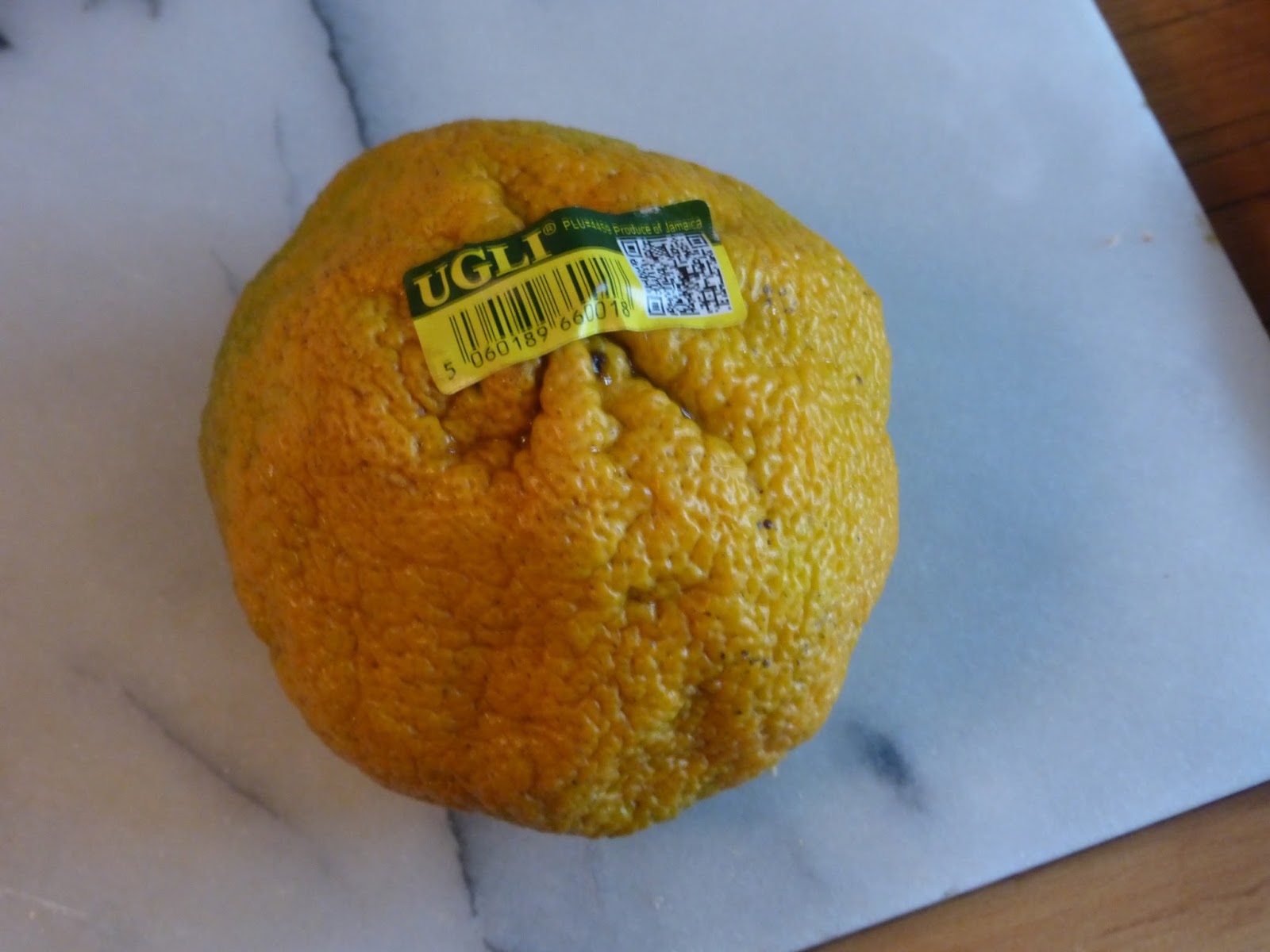
Also found Ugli fruit (or tangelo). Kind of like a grapefruit/orange... it was ok...


Happy Eating!!